
A LITTLE MORE BALANCE. A LOT MORE POSSIBILITY.
The Balanced Life Skills Course
Practical Tools for Managing Stress, Emotions, and Relationships
You can be capable, hardworking, and there for everyone—and still feel overwhelmed. Give yourself space to practice emotion regulation and respond to life’s demands with greater steadiness and confidence.
A 15-minute conversation to explore whether the course is a good fit.
12 Weeks
Time to learn and practice
90 minutes weekly
Live on Zoom
8-10 participants
a small group setting
Guided Journaling
Reflection that supports action

Practical Support For Everyday Life
Build skills you can return to again and again
The Balanced Life Skills Course is a 12-week skills-based group designed for busy, stressed, hardworking adults who want practical tools to manage emotions, reduce stress, communicate more effectively, and navigate relationships with more confidence.
It is a life skills class for adults who want lifelong strategies for emotion regulation, wellness, healthier communication, and more meaningful connection. Guided journaling helps you reflect on what you are learning and make it personally meaningful.
The course is informed by Dialectical Behavior Therapy (DBT), drawing on its practical skills for Mindfulness, Distress Tolerance, Emotion Regulation, and Interpersonal Communication (known in DBT as interpersonal effectiveness). No diagnosis or prior experience with DBT is needed.
Who This Course is For
When you’re managing a lot, support can make room for change.
You may be juggling work, relationships, family responsibilities, health concerns, or an unexpected transition. Perhaps you hold things together on the outside while feeling stretched thin within.
This course may be a good fit if you want to:
- Find more steadiness when stress builds.
- Understand your emotions and choose how to respond.
- Ask for what you need and set clearer boundaries.
- Stay present during difficult conversations.
- Make space for your own needs alongside others’.
- Practice new habits with guidance and encouragement.
What You’ll Learn
Four core skills for a more balanced life.
Simple tools to practice in the moments that matter: at work, at home, and in your relationships.
01 / Awareness & Attention
MINDFULNESS
Practice observing, describing, and participating in the present moment with less judgment. Mindfulness supports emotion regulation by helping you notice thoughts, feelings, and body signals before choosing your next step.
02 / Coping with Hard Moments
Distress Tolerance
Learn self-soothing, acceptance, and coping tools for painful situations you cannot immediately change. Distress tolerance helps you get through intense moments while protecting your goals and relationships.
03 / Understanding and Responding to Emotions
Emotion Regulation
Understand what emotions do, recognize patterns, and practice responding to intense feelings. Emotion regulation skills include naming emotions, reducing vulnerability through self-care, and using Opposite Action and problem solving when appropriate.
04 / Requests, Boundaries & Connection
INTERPERSONAL EFFECTIVENESS
Practice making clear requests, setting boundaries, and navigating disagreement with respect for yourself and others. Drawing on DBT’s interpersonal effectiveness skills, this area brings emotion regulation into the conversations that matter.
Skills for your real life
What would more balance make possible for you?
Mindfulness, distress tolerance, emotion regulation, and interpersonal communication can serve different needs. Explore how they may apply to your attention, mood, worries, and relationships.
Everyday Outcomes
From understanding a skill to using it
How foundational skills can show up in daily life.
What you want to practice
What that can look like
Self-management
Returning your attention, coping with frustration, and noticing needs before you become overwhelmed.
Thoughtful everyday choices
Pausing before an impulsive purchase, an extra commitment, or a reactive message; considering your priorities.
Connection and boundaries
Asking for help, expressing a limit, navigating a workplace disagreement, or making a specific request at home.
Refelct. Discover. Practice.
A place for your own words.
Guided journaling gives you a chance to slow down, notice patterns, and connect each skill to your own life. Short prompts support emotion regulation by helping you name feelings, notice patterns, and identify a manageable next step.
You do not need to be a writer, and you can keep your journal entries private. The emphasis is on discovery and practice, rather than perfect writing.

A sample reflection
Where did I feel pulled off balance this week? What did I need in that moment? Which skill could I try next time?
How we Learn Together
A weekly rhythm that brings skills into daily life.
Each session combines teaching, conversation, reflection, and practice. You will have opportunities to ask questions and learn from the different perspectives in the group.
Arrive and settle.
A brief check-in and mindfulness practice.
Explore a skill.
Clear instruction, demonstration, and everyday examples.
Make it personal.
Guided journaling, discussion, and opportunities to practice.
Take it into your week.
A manageable assignment to help you use the skill between sessions.
From a Past Skills Course Participant
“I enjoyed how practical the skills were and that they were applicable to our daily practice”
Course Details
Make space for your balance.
Format: Live online via Zoom
Length: 12 weekly sessions, 90 minutes each
Group size: 8–10 participants
$780
for the full course
Equivalent to $65 per session. Pay in one to three payments.
Limited sliding scale places are available.
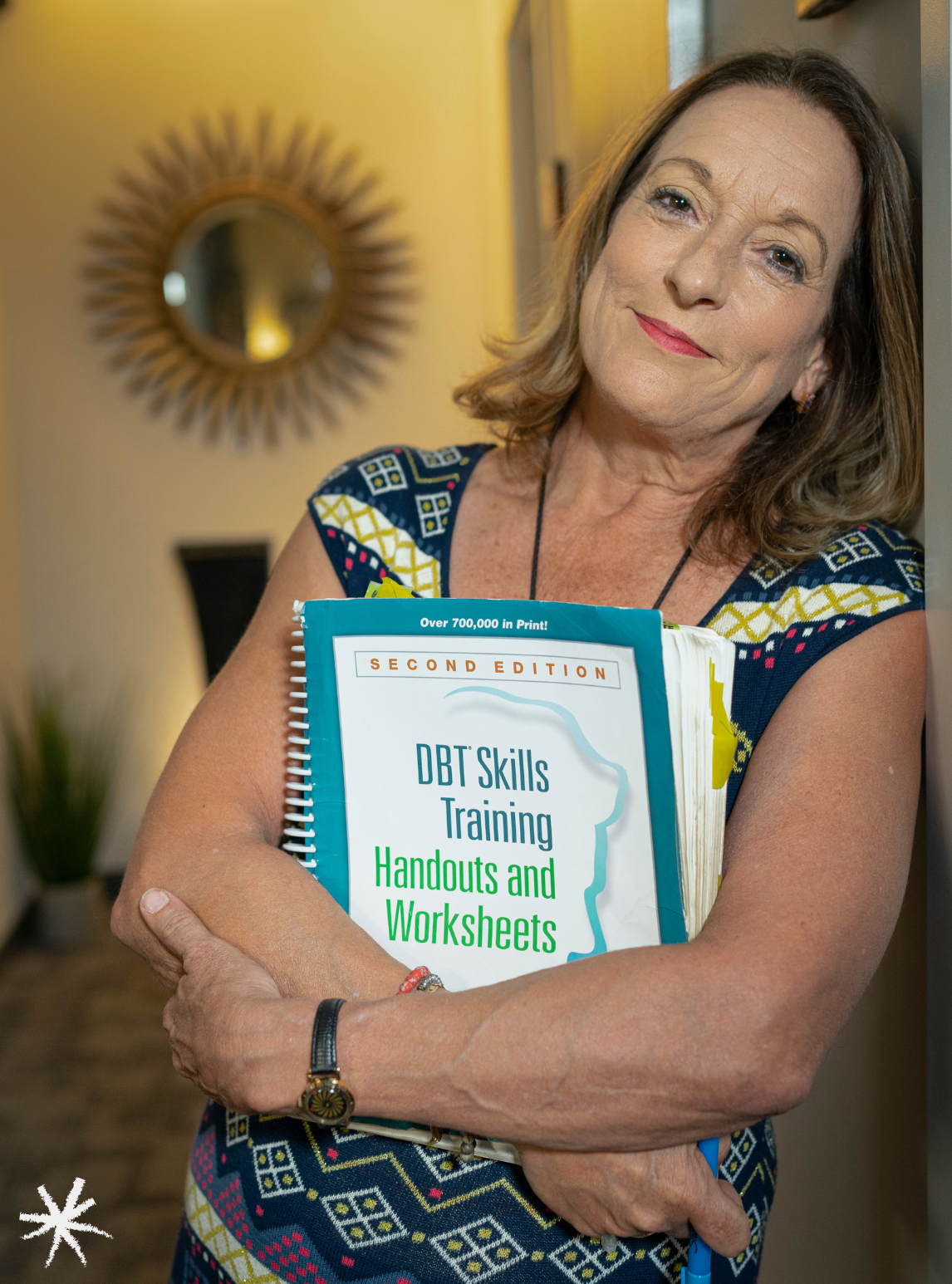
Contact Carla for the next course dates and availability. Participants purchase a skills manual separately and need a private space, reliable internet, and a notebook or journal.
A few things to know
This is a psychoeducational skills course, rather than individual, couples, or process-group therapy. Our focus is learning and practicing tools, rather than processing complex personal experiences in depth. Continue any individual or couples therapy you need alongside the course.
No. The course is for adults who want practical support with everyday stress, emotions, and relationships. Your introductory consultation is an opportunity to discuss your goals and the course’s fit.
Enrollment is a commitment to the full 12-week course. Participants are financially responsible for all sessions, including those they miss.
We review privacy and confidentiality expectations together. Please join from a private location. If coordination with your individual therapist is appropriate, Carla will discuss obtaining your written authorization.
Your Next Step
You make room for so much.
Make some room for yourself.
Let’s talk about what you would like to change and whether The Balanced Life Skills Course can support your next steps.
